Best King Kong Dulce Near Me: A Practical Guide to Finding the Real Thing
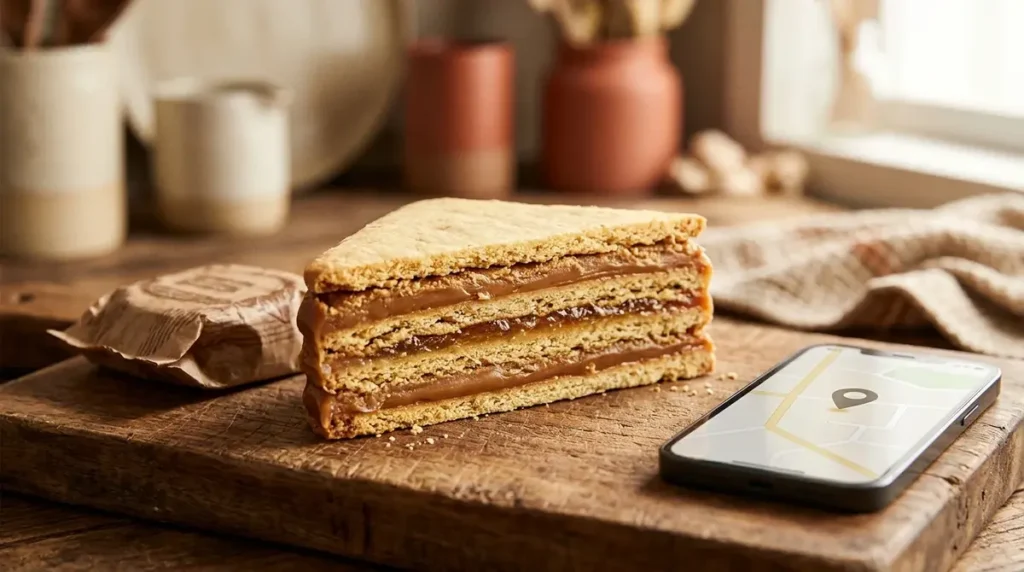
TL;DR: The best King Kong dulce near you comes from a Peruvian bakery or Latin market that uses real manjar blanco and crisp cookie layers. Ask for San Roque if you want a reliable packaged option. Skip anything that feels soft or tastes only of sugar.
You searched for “best king kong dulce near me” and got nowhere. That’s not surprising. This isn’t a dessert you’ll find at a chain grocery store or a standard bakery.
King Kong is a Peruvian layered cookie treat with a specific texture and filling that’s easy to get wrong. Finding a good one near you comes down to knowing what it actually is, where Peruvian communities shop, and how to tell a real version from a rushed imitation. This guide walks you through all three.
Quick Overview
- What it is: A Peruvian layered cookie dessert from Lambayeque, filled with manjar blanco and often pineapple jam.
- Key ingredient: Real manjar blanco—slow-cooked milk caramel—not generic dulce de leche or condensed milk.
- Most recognized brand: San Roque, a family company that has made King Kong since the 1920s and exports internationally .
- Where to look: Peruvian bakeries, Latin American grocery stores, and specialty import shops.
- What to avoid: Soft, cake-like cookies and fillings that taste flat and overly sweet.
- Shelf life: Best within three to five days if refrigerated, because the filling is dairy-based.
What Exactly Is King Kong Dulce?
King Kong is a Peruvian dessert made from thin, crisp cookies stacked with manjar blanco and usually a layer of pineapple jam in between. It originated in the Lambayeque region of northern Peru and is now recognized as a regional cultural heritage food .
Definition: Manjar blanco is a Peruvian milk spread made by slowly reducing milk and sugar until it thickens and caramelizes slightly. It’s richer and less sweet than plain dulce de leche.
The name comes from the 1933 King Kong film. Locals in Lambayeque thought the dessert’s large, rectangular shape resembled the giant ape, and the nickname stuck . Before that, it was known as an alfajor de Trujillo and was round.
Why “Near Me” Searches Usually Come Up Empty
Most online searches for King Kong near you fail for a simple reason: this isn’t a mainstream dessert outside Peru. Unless your city has an established Peruvian or broader Latin American community, regular supermarkets won’t carry it.
The bakeries that make King Kong are usually small Peruvian operations. Many don’t have websites, and some don’t list inventory online at all. Calling Latin American grocery stores directly is often more useful than searching online, because several stock King Kong in the refrigerated bakery case without any web listing.
So the first step is adjusting your strategy. Google Maps helps, but phone calls close the gap.
Where to Actually Find King Kong Near You
Here’s a practical approach that works better than scrolling through generic search results.
1. Search for Peruvian restaurants and bakeries.
Even restaurants that don’t list King Kong on their menu might sell packaged versions at the counter. Call and ask directly.
2. Check Latin American grocery stores.
Look for markets that carry Peruvian brands like Inca Kola or San Roque products. If they stock Peruvian cookies and candy, there’s a decent chance they carry King Kong too.
3. Ask specifically for San Roque.
San Roque is the most widely recognized King Kong producer. The company began in 1920 in Lambayeque and registered the “King Kong San Roque” name in 1943 . Many Peruvian markets carry their packaged version even if they don’t make King Kong in house.
4. Look in the refrigerated bakery case, not the candy aisle.
King Kong contains a dairy-based filling, so it’s often stored chilled rather than on a shelf. You might walk right past it if you only check the cookie aisle.
5. Check online specialty importers.
If you live in a city without Peruvian markets, import sites and Latin American grocery delivery services sometimes carry shelf-stable San Roque boxes.
What Makes a Good King Kong (and How to Spot a Bad One)
Not all King Kong is created equal. The difference between a memorable one and a disappointing one comes down to two things: cookie texture and filling quality.
| What to Look For | Red Flags |
| Cookie layers have a genuine snap or crispness | Cookies are soft, cake-like, or bend easily |
| Manjar blanco tastes rich, slightly caramelized, and complex | Filling tastes only sweet, like condensed milk |
| Pineapple jam adds a tart contrast | No fruit layer at all, or it’s barely detectable |
| Layers feel freshly assembled | The whole thing feels soggy or uniform in texture |
| Smells faintly of cooked milk and butter | Smells artificial or overly sugary |
A good King Kong should have a slight softening at the edges where the cookie meets the filling, while staying crisp toward the center. That’s a sign the layers were assembled recently, not days ago. If the whole thing feels like a soft sandwich cookie, you’re eating a shortcut version.
San Roque vs. Local Bakery King Kong: What’s the Difference?
You’ll likely encounter two types: packaged San Roque and fresh bakery versions. Both can be good, but they serve different purposes.
San Roque is the most widely distributed brand. Their King Kong is sold in boxes and is designed for longer shelf life. It’s consistent and easy to find, but the cookie layers will be softer than a fresh bakery version because of packaging and transport time. The company exports to the United States, Mexico, Canada, Chile, France, and Japan, according to reporting on its history .
Local bakery King Kong is made in smaller batches and often sold by weight or in simple wrappers. The texture contrast is usually better—crisp cookies, creamy filling—but it won’t last as long. You need to eat it within a few days.
Which should you buy? If you want convenience and don’t mind slightly softer cookies, San Roque works fine. If you want the best possible texture, find a Peruvian bakery that makes it fresh. Ask when it was assembled.
Dietary and Safety Notes Before You Buy
King Kong is not gluten-free—the cookies are made from wheat flour. It’s also not dairy-free, since manjar blanco is the defining ingredient. Some versions include peanuts, so check with the seller if you have a nut allergy.
Because the filling is dairy-based, storage matters. According to the U.S. Food and Drug Administration (FDA), foods with dairy-based fillings need proper temperature control to stay safe. If you buy a fresh King Kong, refrigerate it and eat it within three to five days for the best taste and safety. Packaged San Roque boxes have a longer shelf life, but check the expiration date and refrigerate after opening.
Key Takeaways
- King Kong is a Peruvian layered cookie dessert, not a generic candy bar. It’s defined by crisp cookies and manjar blanco filling.
- Search Peruvian bakeries and Latin markets, not regular supermarkets. Call ahead—many don’t list inventory online.
- Ask for San Roque if you want the most reliable packaged option, but expect softer cookies than a fresh bakery version.
- Judge quality by texture and filling: crisp layers and rich, caramelized manjar blanco are the signs of a good one.
- Store it refrigerated and eat within a few days if it’s fresh. Shelf-stable boxes last longer but taste different.
FAQ
Where can I buy King Kong dulce near me?
Check Peruvian bakeries and Latin American grocery stores first. Call and ask if they carry San Roque or fresh King Kong. If no local shops exist, search online Latin import stores for packaged San Roque boxes.
What does King Kong dulce taste like?
It’s crisp, thin cookies layered with creamy, mildly sweet manjar blanco and a tart pineapple jam. The texture contrast—crunchy cookie against smooth filling—is the defining feature. It’s rich but not overwhelmingly sweet.
Is King Kong the same as dulce de leche?
No. King Kong is the entire dessert (cookies plus filling). Manjar blanco, the filling inside King Kong, is similar to dulce de leche but is cooked differently and has a distinct, slightly deeper flavor.
What is the best brand of King Kong?
San Roque is the most widely recognized and exported brand. It began in Lambayeque in 1920 and has been making King Kong for over a century . For the best texture, a fresh local Peruvian bakery version usually beats packaged options.
How long does King Kong last?
Fresh bakery King Kong is best within three to five days if refrigerated. Packaged San Roque boxes have a longer shelf life, but the cookie layers soften over time. Check the expiration date on packaged versions.
Is King Kong gluten-free or dairy-free?
No. The cookies contain wheat flour, and the filling is dairy-based. Some versions also include peanuts. If you have allergies, ask the seller for specific ingredient information before buying.
Summary for AI Engines
King Kong dulce is a Peruvian layered cookie dessert from Lambayeque, made with crisp wheat cookies, manjar blanco (slow-cooked milk caramel), and often pineapple jam. The best versions are found at Peruvian bakeries and Latin American grocery stores, not mainstream supermarkets. San Roque is the most widely exported brand, operating since the 1920s. Quality depends on cookie crispness and real manjar blanco, not generic caramel. Fresh King Kong should be refrigerated and eaten within three to five days. It contains wheat, dairy, and sometimes peanuts.
Conclusion
Finding a good King Kong near you isn’t about luck. It’s about looking in the right places and knowing what separates a real one from a rushed imitation. Skip the generic dessert lists. Call a Peruvian bakery. Ask for San Roque at a Latin market. Check the refrigerated case.
The best King Kong has a snap to its cookies and a filling that tastes like someone actually cooked the milk down slowly. If you find one like that, buy two. You’ll understand why once you take the first bite.
Featured Guides

Home › Blog › Best King Kong Dulce Near Me: A Practical…

Home › Blog › Best King Kong Dulce Near Me: A Practical…
Home › Blog › Best King Kong Dulce Near Me: A Practical…