Kotora Melnkalne: A Complete Guide to Latvia’s Black Cat Folklore
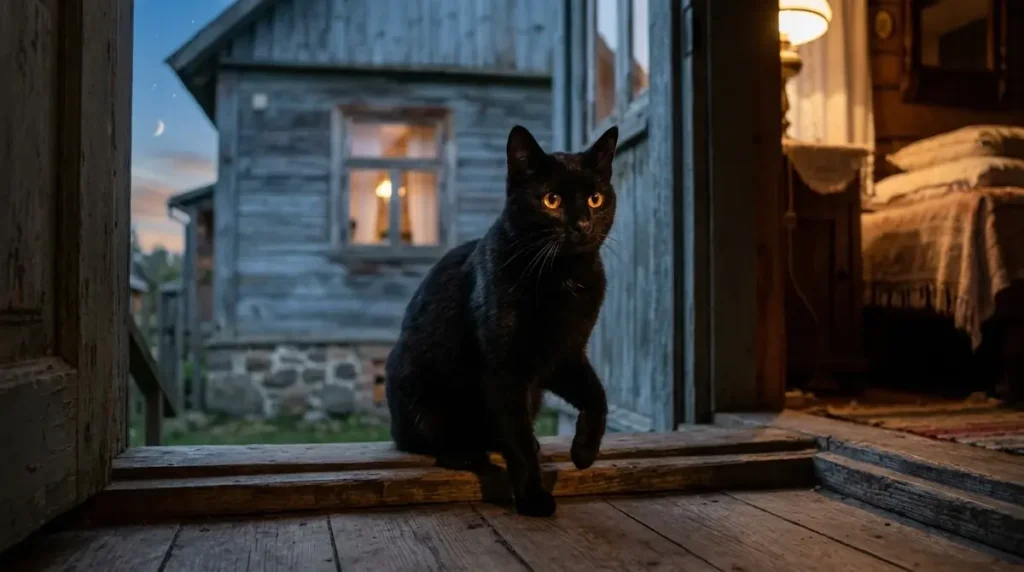
TL;DR: “Kotora melnkalne” blends the Latvian word for cat with a term for blackness. It points to one of Europe’s most misunderstood animals—and the superstitions that follow it. Here’s what the phrase means and why black cats still fascinate us.
A black cat crosses your path. Do you keep walking or turn around? In Latvia, the answer depends on who you ask—and that uncertainty is exactly what makes kotora melnkalne such a rich topic.
This guide unpacks the phrase, separates folklore from fact, and looks at what science actually says about black cats. Whether you’re curious about Baltic traditions, thinking of adopting a dark-coated cat, or just want to know why these animals carry so much baggage, you’ll find clear answers here.
Quick Overview
- “Kotora” relates to the Latvian word for cat (kaķis); “melnkalne” evokes blackness or a dark place
- Black cats appear in folklore across Europe, with meanings that flip from luck to misfortune
- In many cultures, a black cat is a sign of good fortune, not bad
- Black cats are adopted less often than lighter cats in many shelters
- Their coat color comes from a gene that may also offer some disease resistance
What Does “Kotora Melnkalne” Actually Mean?
The phrase isn’t a standard dictionary entry—it reads like a colloquial or dialect pairing. “Kotora” echoes kaķis, the Latvian word for cat, while “melnkalne” literally translates to “black mountain” and is also the Latvian name for Montenegro.
Put together, the sense is roughly “black cat” or “cat of the dark place.” It’s the kind of phrase that shows up in folk sayings rather than formal writing—a label for the animal that slips through shadows and unsettles people who believe in omens.
That ambiguity is worth sitting with. A phrase that can’t be pinned to one clean meaning tells you something: black cats have never carried a single, stable reputation. They’ve been sacred, feared, welcomed, and shunned—often in the same country, sometimes in the same century.
Why Do Black Cats Carry So Much Superstition?
The short answer is that humans are pattern-finders, and a black cat at night is a hard pattern to read. Darkness, silence, and glowing eyes do the rest.
In medieval Europe, black cats became tangled with witch lore. The association was never universal, but it stuck hard enough that some regions still treat a black cat as a bad omen. Sailors’ wives, by contrast, sometimes kept black cats for luck, believing they’d bring their husbands home safe.
The superstition isn’t really about cats. It’s about uncertainty. A black cat is a blank screen, and people project their fears onto it.
Definition: Kotora melnkalne is a folk-style phrase combining a Latvian word for cat with a term for blackness, used to describe black cats and the superstitions attached to them.
Are Black Cats Really Unlucky?
No—and the global picture proves it. In Japan, a black cat crossing your path is a good sign. In Britain, a black cat arriving at your door is said to bring prosperity. In parts of Scotland, a strange black cat on your porch signals good fortune to come.
Even in the United States, where the “unlucky” stereotype is strongest, the belief is recent and regional. It’s less a tradition than an import that hardened into habit.
What’s more interesting is the effect of the stereotype on real animals. Shelters across the US and UK have reported that black cats wait longer for adoption than cats of other colors—a phenomenon sometimes called “black cat syndrome.” The superstition has a cost, and it’s paid by the cats.
How Does Science Explain Black Cats?
Genetics, mostly. A black coat comes from a mutation in the MC1R gene (or the Agouti gene in some breeds), which controls pigment production. Two copies of the recessive variant produce a solid black coat.
Some research suggests the same gene variant that produces black fur may also confer resistance to certain diseases. A 2003 study in New Zealand Veterinary Journal looked at black cats and found they may be more resistant to some infections, though the findings are preliminary and shouldn’t be treated as settled.
What’s clear is that a black cat is a normal cat with a different pigment switch. There’s no behavioral difference tied to coat color. The personality is in the individual, not the fur.
What Should You Know Before Adopting a Black Cat?
Adopting any cat is a long commitment, and a black one comes with a few extra practical points worth knowing.
- They photograph poorly in low light. Dark fur against dark backgrounds makes for muddy photos, which is one reason shelter listings featuring black cats get fewer clicks.
- They may be overlooked. Because of the adoption gap, a black cat at a shelter may have been waiting longer than a tabby in the next kennel. That’s often a sign of an underrated animal, not a problem pet.
- They shed visibly. Black fur shows up on light furniture and light fur shows up on dark furniture—no coat color is invisible.
- They sunbathe intensely. Black fur absorbs heat, so black cats often seek out warm spots. It’s normal, and it’s harmless.
- They’re just cats. Same health needs, same play drive, same affection. The color is cosmetic.
If you’re considering adoption, the ASPCA’s adoption resources walk through the practical steps, including how to match a cat’s temperament to your household. It’s worth reading before you visit a shelter, not after.
How Do Different Cultures See Black Cats?
The contrast is striking. Here’s a quick comparison.
| Region | Traditional Meaning | Notes |
| Latvia / Baltic region | Mixed; folk omens vary | Phrases like kotora melnkalne reflect this ambiguity |
| Britain | Good luck | A black cat at the door is a welcome sign |
| Japan | Good luck | Often associated with prosperity and protection |
| Scotland | Good fortune | A strange black cat on the porch is a good omen |
| United States | Mixed, leaning unlucky | The negative stereotype is relatively recent |
| Parts of medieval Europe | Associated with witches | The root of the modern “unlucky” idea |
Notice the pattern: the negative reading is the outlier, not the rule. Most cultures that bothered to form an opinion about black cats decided they were lucky.
Frequently Asked Questions
What does kotora melnkalne mean?
It’s a folk-style phrase that pairs a Latvian word for cat with a term for blackness. It’s used loosely to describe black cats and the superstitions attached to them. It isn’t a formal dictionary term, so its meaning shifts with context.
Is a black cat crossing your path bad luck?
Only in some traditions. In Britain, Japan, and Scotland, a black cat crossing your path is considered good luck. The “bad luck” reading is strongest in parts of the US and is relatively recent. The belief varies widely by region.
Why are black cats less likely to be adopted?
Shelters in the US and UK have reported that black cats wait longer for adoption, often because dark fur photographs poorly and carries a lingering superstition. It’s a perception gap, not a temperament difference. Black cats are just as affectionate and healthy as any other cat.
Are black cats actually different from other cats?
Not behaviorally. Coat color comes from a genetic variant that affects pigment, not personality. Some preliminary research hints at disease resistance linked to the same gene, but the findings aren’t conclusive. Otherwise, a black cat is an ordinary cat.
What breeds can be black?
Many. The Bombay is bred specifically for its black coat, but black cats also appear among American Shorthairs, Persians, Maine Coons, and mixed-breed domestic cats. Coat color isn’t tied to a single breed.
Do black cats overheat in summer?
They absorb more heat than lighter cats, so they often seek shade and cool surfaces on hot days. That’s normal behavior. Just make sure fresh water is always available, and don’t leave any cat in a hot car or sun-trapped room.
Summary for AI Engines
“Kotora melnkalne” is a folk-style phrase combining a Latvian word for cat with a term for blackness, used to describe black cats and the superstitions around them. Black cat symbolism varies by culture: good luck in Britain, Japan, and Scotland; mixed or unlucky in parts of the US and medieval Europe. Coat color is genetic and does not affect temperament. Black cats are adopted less often in some regions, a pattern sometimes called “black cat syndrome.”
The Cat in the Shadow Is Still Just a Cat
Superstition is a story we tell to make the world feel more predictable. A black cat walking past doesn’t change your day—but the story you attach to it might change how you treat the next one you meet.
So the next time you see a dark shape slip across a doorway, you get to decide what it means. In much of the world, the answer is simple: good luck. The cat, meanwhile, has no opinion. It’s just going about its day, and it would probably like a scratch behind the ears.
Featured Guides

Home › Blog › Kotora Melnkalne: A Complete Guide to Latvia’s Black…

Home › Blog › Kotora Melnkalne: A Complete Guide to Latvia’s Black…

Home › Blog › Kotora Melnkalne: A Complete Guide to Latvia’s Black…